Section 18 of the Australian Consumer Law prohibits misleading and deceptive conduct. The text of the section is quite simple:
A person must not, in trade or commerce, engage in conduct that is misleading or deceptive or is likely to mislead or deceive.
This simple section has enormous power and surprising breadth. It has been used in a wide variety of situations. Its application is not restricted to what we would typically think of as consumer law issues. The section applies to any conduct, in trade and commerce. This includes business to business transactions. It is not limited to small transactions – it can apply to billion dollar transactions.
The section cannot be contracted out of – i.e. a contract cannot exclude section 18 so that the party with the higher bargaining power can bully the other party.
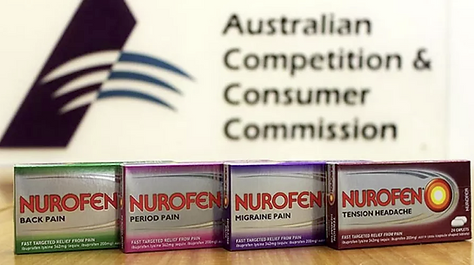
Nurofen was pursued by the ACCC for allegedly misleading consumers about “targeting” pain with its medicines.
What type of behaviour does it prohibit?
It prohibits most kinds of dishonest behaviour relating to a product or service in business. Section 18 does not apply in a domestic setting e.g. you probably cannot claim your brother was misleading and deceptive at Christmas dinner. It also does not apply to the legal relationship between and employee and employer, and would not apply to transactions which take place in a hobby setting or community setting.
What does the section mean by ‘conduct’?
Conduct can be anything that is an express or implicit representation, that is misleading or deceptive. The representations might written in a contract, in an email, in advertising or be a verbal statement. The section can even apply to silence, i.e. your silence in a particular circumstance can amount to misleading someone.
Some examples of conduct likely to be misleading or deceptive:
- an electronics shop selling goods that they claim are compatible with particular other goods or software but in fact there are not compatible
- advertising a product to have certain specific qualities when it does not
- an internet service provider offering ‘unlimited’ download plans when there are in fact download limits
- a real estate agent describing a harbour property for sale as having water views when you need to climb on the roof of the building to see the harbour
- a public company publishes a statement that it has certain profitable contracts signed thus increasing the value of the company, when in fact the contracts are still being negotiated
- a seller of a business tells the buyer that the business has had consistent increasing turnover when in fact the financial statements show that turnover has been decreasing for some time
- a landlord telling a prospective tenant that their bar premises can seat 200 people when Liquor Act regulations prohibit more than 100 people in the premises
Business to business claims
As you can see from the examples, many times misleading and deceptive conduct relates to business to consumer transactions. However it also applies to business to business transactions.
An action of a breach of section 18 can be useful for businesses when another party has been misleading throughout the transaction, but that dishonesty does not amount to a breach of contract or breach of another law.
Accidental deception
The caselaw is clear that you can accidentally mislead someone. You do not need to intend to be misleading and deceptive to breach section 18. This means that if you are making statements about your business, products or services you need to be sure that those statements, in the context of the circumstances, are not misleading.
What is your remedy if someone has been misleading and deceptive?
Not only does section 18 have wide application, but it also has a wide range of remedies available once proven. If you can prove the other party breached section 18, then the Australian Consumer Law provides for:
- the Court may make a declaration that the party has been misleading and deceptive
- the other party may be ordered to publish corrective advertising, or may be ordered to stop the offending conduct by an injunction
- the Court may order the other party to pay you compensation (damages) for losses you have suffered as a result of the misleading and deceptive conduct
It is important to note that this is the general ‘catch all’ section on misleading conduct in the Australian Consumer Law. There are a range of other specific provisions that prohibit misleading statements as to the quality of a good sold, or a service for sale that may also apply.

Trivago was found guilty in the Federal Court of misleading consumers. Accommodation was ranked by the amount of commission they received rather than what was the “best deal”.
How do I avoid misleading and deceptive conduct claims against my business?
If you make a representation about the quality, nature, function or specification of a good or service you sell, you need to be able to back up that representation. You need to be comfortable that your representations are correct.
I have been mislead in a business deal. What options do I have?
Come and see us and we can advise you if the other party has breached section 18 of the Australian Consumer Law and what you may be able to do about it.
If you have any questions about this article, then please feel free to contact our commercial team on (02) 6772 4899 or via email to ccowley@moin.com.au